Dread It or Discuss It: Decoding Silksong’s Difficulty Debate
- 8 Sep 2025
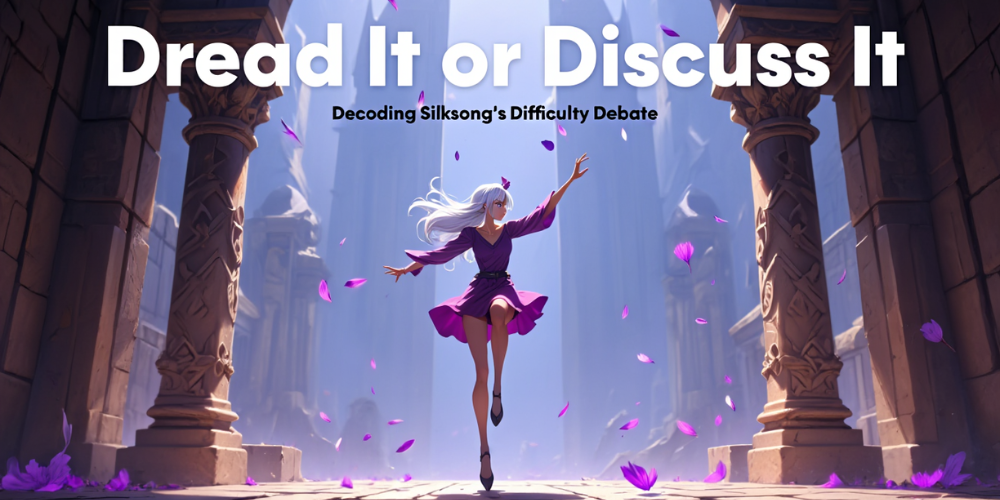
Every time a precision action game nears release, the conversation splits along a familiar fault line: one side praises firm challenge as the heart of the experience, the other highlights rough edges that turn ambition into fatigue. Hollow Knight Silksong sits squarely in that storm. Anticipation has inflated expectations, previews emphasize speed and verticality, and community clips naturally spotlight the sharpest edges. What follows is a tug-of-war between swagger and sincerity; people trade shorthand like git gud while others catalog readability problems, late punish windows, and travel friction that stretches a single mistake into an outsized setback. None of this means the sky is falling. It does mean we need a clear framework for talking about difficulty that separates personal mastery from systemic design. A metroidvania thrives when it makes learning feel fair: failures are legible, recoveries are possible, and the map bends to curiosity without wasting your time. With Silksong, the tempo is higher, Hornet’s toolkit is springier, and the ritual of healing and resource management demands quicker judgments. That combination magnifies both the joy of flow and the sting of misreads, which is why the discourse feels so charged. Let’s slow it down and define where craft ends and preference begins.
Start with readability, the cornerstone of fair challenge. In a dense 2D fight, you need three promises to hold: clear telegraphs, reliable input windows, and a camera that keeps threats in view. Hollow Knight set a high bar here with distinct animations, consistent i-frame logic, and arenas that rarely hid danger behind foreground clutter. Silksong, if it truly leans into faster exchanges and steeper vertical plays, must preserve that clarity at speed. That means startup tells that stay visible even during screen shake, parry or counter timings that do not drift under frame pacing variance, and audio cues that survive layered effects. Equally vital is the economy around recovery: if healing is riskier in motion, the game should offer more micro-openings or alternative sustain options so success never hinges on perfect runs only. Precision platforming layers on top: wall-kicks, line swings, and needle dashes feel great when dead zones are tuned, acceleration is predictable, and air control respects the player’s intent. These are technical dials, not philosophical fights. When previews raise concerns about flubbed reads or crowded soundscapes, the ask is not to declaw the game; it’s to sharpen signals so mastery feels earned rather than guessed.
Next is friction outside combat. Strong games challenge your mind and hands; weak friction challenges your patience. Bench or checkpoint spacing defines whether an error costs a lesson or a commute. If a tough encounter sits beyond a gauntlet of basic mobs and hazards, frustration compounds even when the boss design is excellent. Smart routing solves this: one-way doors opened from the far side, shortcuts that unlock after a first attempt, or fast-travel pins that appear near major fights once discovered. Currency loss on defeat, shard retrieval, and vendor distance can likewise tilt from tense to tedious if stacked together; the solution is elasticity. Let players preserve some earnings via bank items or charter tokens, and ensure essential upgrades remain within reach even for those who stumble. Map readability matters too: if objectives stack in tight biomes, the UI should make layers unambiguous, with filters for routes, secrets already tested, and traversal gates you can’t yet pass. Finally, input comfort is a make-or-break factor that often hides in settings: offer analog dead-zone sliders, remappable arts on bumper or trigger, and a toggle for hold-versus-press actions so extended sessions don’t strain thumbs or wrists. Challenge thrives when the road to a rematch is brisk and your rig feels like an ally.
Then there’s the social layer, where tone can help or harm. The phrase git gud started as a wink but often lands as a door slam; it erases useful detail about why someone struggled. We can do better without asking developers to dilute their vision. Players: focus reports on what you saw, what you tried, and which feedback cues failed you—say the lunge windup is obscured by particles at the arena’s edge, or the heal window feels viable only after a very specific move, making recovery too binary. Devs: clarity toggles preserve identity. Consider assists that respect intent while guarding pride, such as adjustable damage taken, a heal that locks you in place for less time, parry leniency sliders, or optional mid-encounter restarts that unlock after a few attempts. Practice rooms and boss rematches are also community darlings; they encourage learning without backtracking fatigue. Cosmetic or journal markers can quietly celebrate no-assist clears so purists keep their milestones. This is not a demand for an easy mode; it’s an argument for configurable friction that turns more players into evangelists without erasing the steep summit that veterans crave.
Conclusion
If you care about Silksong’s legacy, the goal is not to win an argument but to refine a shared language. Ask whether defeats feel teachable, whether the climb back to a fight is just long enough to reset nerves, whether inputs land cleanly, and whether the spectacle ever muddies the message. When the answer is yes, high difficulty feels like a pact—tough but just. When the answer is no, minor trims to signaling, traversal, or recovery can transform anxiety into momentum without touching enemy health or move sets. For players, the best contribution is practical feedback and a little grace for folks who learn at different speeds. For the team, the best gift is transparency about what they are tuning and why, plus a few dials in settings that turn frustration into focus. The conversation will rage regardless; that’s the cost of making something beloved. But if we anchor it to readability, routing, input feel, and respectful assists, we trade heat for light. And when the day finally comes to guide Hornet through Pharloom end to end, the debate can give way to the thing that brought everyone here in the first place: that electric loop of discovery, mastery, and the quiet pride of getting it right.
Latest Articles
-
Digital Court Legends: A Modern Ode to Streetball
The experience of playing NBA The Run unfolds much like an afternoon of impromptu street basketball with friends. From the sheer thrill of sinking an unexpected basket to the camaraderie, the game captures the pulse of real life courts while forging its own digital legacy. Every match pulses with energy and creativity, blending nostalgic streetball memories with refined digital artistry. Players step into a realm where each dribble, shot, and pass is a testament to both individual flair and team synergy. The game invites enthusiasts to relive the personal triumphs and collective challenges of competitive basketball, all wrapped in a...

- Steve Nielsen
- 5 Jul 2026
-
Jodie Foster Unmasks the Formula: A Critical Look at the Film's Mechanical Narrative
The conversation around the recent Formula 1 film has taken an unexpected turn following a candid commentary by Jodie Foster. Her remarks, delivered during an industry event about the evolving business of cinema, suggest that the film’s style and delivery seem almost mechanical in nature.
Foster expressed her view that the movie adheres to a formulaic structure, one that could easily be compared to lessons learned in a classroom setting. She noted that every aspect—from the scripted dialogue to the predictable performances—mirrors what one might expect if the creative process were entirely dictated by artificial precision. According to her perspective, the...

- Lillian Young
- 5 Jul 2026
-
Capcom’s World Stage: Charting the Global Road to Street Fighter 6 Domination
The recent conclusion of a major tournament has "Pave the way for an exhilarating phase in" competitive Street Fighter 6 events. The latest announcements have brought attention to upcoming tournaments that will spotlight top players from around the world.
After Evo 2026 wrapped up over the weekend, There's growing excitement in anticipation of the upcoming event in Paris, France this summer. The Esports World Cup is scheduled for July and August, promising dynamic matchups in Capcom's latest fighting series. In addition, an event in November will further showcase an SF6 competition organized by the Esports Foundation.
At this point, 12 of the...
- Joshua Nelson
- 5 Jul 2026