Minecraft Builder’s Path: Redstone, Farms, and Smart Bases
- 28 Oct 2025
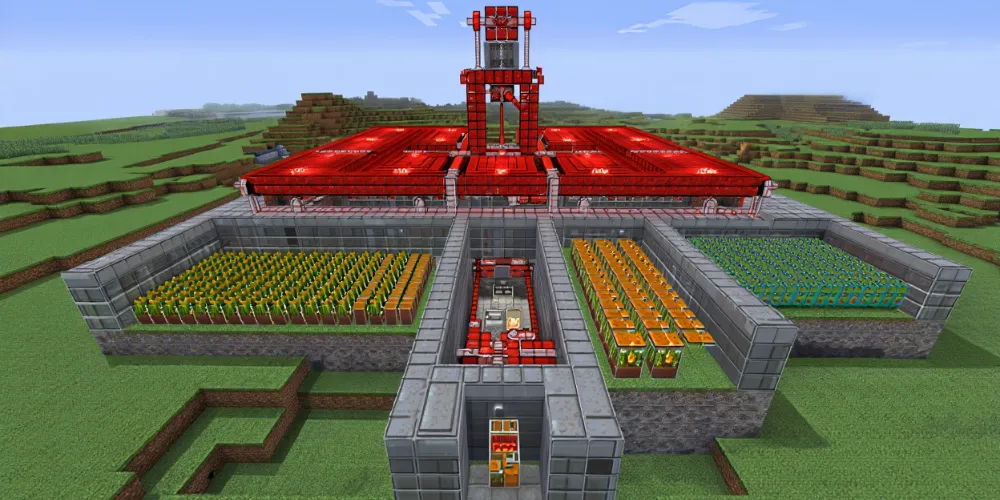
This guide is for players who want to grow from a simple starter hut to a smart, automated base. We focus on practical building tricks, redstone basics, easy farms, and clean storage. You will learn how to plan layouts, gather the right blocks, make safe lighting, and add machines that save time. Everything works for Java and Bedrock, with small notes if they differ.
The goal is simple: build faster, waste less, and enjoy your world more. You do not need complex blueprints or giant machines to see a big change. Use the steps below, add one feature at a time, and your base will feel organized and powerful by the end of the week.
Main Guide
Plan Your Base Like a Small Town
- Pick a location with trees, stone, animals, and water nearby. Flat areas or gentle hills are easiest.
- Sketch zones: home, storage, farms, animals, portal, and a workshop with furnaces and anvils.
- Leave space between builds for paths and gardens. Future you will thank you.
- Place waypoints: a tall marker or a beacon spot at center, and signs with coordinates at key exits.
Gather Resources and Set Up Builder Tools
- Silk Touch pickaxe for smooth stone and glass; Fortune pickaxe for ores and crops.
- Efficiency IV/V and Unbreaking III on tools; Mending from a librarian to repair with XP.
- A stonecutter saves blocks when shaping stairs and slabs. Always craft with it.
- Carry a water bucket, shears (for leaves), and shovels with Efficiency for path work.
Building Basics: Shape, Depth, and Palette
- Start with a simple shape, then add depth: push windows back one block, add trims with stairs and slabs.
- Use 3–4 block types that match: for example, spruce + stone brick + cobble + andesite.
- Break big walls with pillars, windows, flower boxes, and roof overhangs.
- Roofs change the mood: gable for classic, hip for soft lines, or a low slate for modern.
Landscaping and Pathways
- Mix path blocks: dirt path, coarse dirt, gravel, and andesite for a natural look.
- Add small details: fences, lanterns, bushes, and custom trees (logs + leaf blocks).
- Use gentle slopes, stairs, and bridges to connect levels. Avoid jumpy routes.
- Place benches and carts to make areas feel alive.
Lighting and Safety
- Hostile mobs spawn in dark spaces. Use lanterns, torches, and glow lichen to light paths and roofs.
- Hide light inside leaves or behind trapdoors for clean looks.
- Slab or carpet rooftops to stop spawns. Buttons and string can help in tricky spots.
- Perimeter wall or fence with gates keeps nights calmer while you build.
Redstone Basics You’ll Use Everywhere
- Power sources: levers, buttons, pressure plates, observers, and daylight sensors.
- Wires and delays: redstone dust carries power; repeaters extend it and add delay.
- Comparators read container fullness (great for sorters and smelters).
- Pistons and sticky pistons move blocks; droppers and dispensers move or use items.
Simple Circuits to Learn First
- Clock: a fast or slow loop for crops or lights (observer facing observer for a tiny clock).
- T-Flip-Flop: turns a button press into a toggle (use a dropper-hopper-latch or piston designs).
- Pulse extender: keeps a signal on longer (comparator loop) so doors stay open a moment.
Starter Automation That Saves Time
- Auto-smelter: chest → hoppers → furnace/smoker/blast → output chest. Add fuel input on top.
- Cobblestone generator: water meets lava; mine safely with a pickaxe for early blocks.
- Bamboo + furnace = infinite fuel loop (Java). In Bedrock, use kelp blocks or charcoal as fallback.
- Bone meal composter loop: feed seeds/saplings into composters to fuel farms and tree growth.
Crop and Animal Farms (Low Effort)
- Carrot/potato farms: villager farmer harvests; hoppers collect (Java). On Bedrock, item flow differs; test with water streams.
- Sugar cane: grow beside water. Observer + piston row auto-harvests.
- Cow and sheep pens: 2x2 breeder with a water baby drop makes clean collection.
- Chicken cooker: hopper + lava blade + dispenser for eggs (Java timing is simpler than Bedrock).
Villagers: Trading Hall and Profits
- Lock a librarian with a lectern. Aim for Mending, Unbreaking, Efficiency, and Fortune/Silk Touch.
- Fletcher trades sticks for emeralds; easy profit from tree farms.
- Protect the hall with walls and light. Use beds and job blocks to keep roles stable.
- Zombification discounts (Java) exist but require care and potions. On Bedrock, discounts are more limited.
Iron and XP Farms (When You’re Ready)
- Iron farm: villagers + beds + a “scare” source spawn golems that drop iron. Follow a current 1.x design for your version.
- Mob farm: a simple darkroom or tower with water channels pushes mobs to a drop zone for drops and XP.
- Guardian farm (ocean monument) and enderman farm (The End) are strong late-game options.
Storage You Can Actually Find Things In
- Make a chest hall near your workshop. Group by type: stones, wood, plants, mob drops, valuables, gear.
- Color-code with signs or item frames. Keep rare loot in a “vault” row.
- Add a sorter later: item filter (comparator + repeaters + dust) for each lane. Start small with 6–12 items.
- Use shulker boxes for project kits: “Roads,” “Roof,” “Redstone,” and keep one empty for loot runs.
Transport: Move Faster, Explore Smarter
- Nether highways: 1 block in the Nether equals 8 in the Overworld. Build safe, enclosed tunnels.
- Ice boat roads: packed or blue ice lines let boats move very fast. Add soul lanterns for style.
- Rails: powered rails every 38–40 blocks keep speed. Use stations with buttons and detector rails.
- Waypoints: place maps on walls and mark hubs with banners named in an anvil.
Java vs Bedrock: Small Notes
- Redstone timings and mob spawning differ. Always test small before you scale up.
- Trident killers are common on Bedrock; sweeping edge swords rule on Java.
- Boat/ice speed and entity cramming limits vary. Check a current wiki page if a farm feels off.
Performance and Chunk Care
- Keep farms near your base or add chunk loaders (Java only, and version dependent).
- Limit constant-ticking circuits. Use levers to turn off farms when not in use.
- Spread redstone across chunks to avoid one heavy hotspot.
- On lower-end devices, reduce render distance and particle effects while farming.
Weekly Upgrade Plan (Quick Wins)
- Day 1–2: path network, lighting, and a tidy storage wall.
- Day 3: auto-smelter and sugar cane line.
- Day 4: villager hall with one good librarian and one fletcher.
- Day 5: small mob farm for string, arrows, and XP.
- Day 6–7: start a sorter row and a nether tunnel to a key biome.
Conclusion
Build with a plan, light your base, and add small machines that remove boring tasks. With a clean palette, safe paths, a few farms, and a simple sorter, your world becomes easier and more fun. Improve one area each session, test designs on a small scale, then expand when it works.
- Carry a builder kit: silk pick, shovel, axe, water, scaffolding, and torches.
- Use stonecutter and stairs/slabs to add depth without wasting blocks.
- Start with an auto-smelter and sugar cane; they power many upgrades.
- Add one villager at a time; lock trades you need most.
- Keep farms switchable to protect frames and reduce noise.
- Mark hubs and use nether roads for fast travel.
- Review your base weekly: fix dark spots, label chests, and upgrade tools.
Latest Articles
-
Digital Court Legends: A Modern Ode to Streetball
The experience of playing NBA The Run unfolds much like an afternoon of impromptu street basketball with friends. From the sheer thrill of sinking an unexpected basket to the camaraderie, the game captures the pulse of real life courts while forging its own digital legacy. Every match pulses with energy and creativity, blending nostalgic streetball memories with refined digital artistry. Players step into a realm where each dribble, shot, and pass is a testament to both individual flair and team synergy. The game invites enthusiasts to relive the personal triumphs and collective challenges of competitive basketball, all wrapped in a...

- Steve Nielsen
- 5 Jul 2026
-
Jodie Foster Unmasks the Formula: A Critical Look at the Film's Mechanical Narrative
The conversation around the recent Formula 1 film has taken an unexpected turn following a candid commentary by Jodie Foster. Her remarks, delivered during an industry event about the evolving business of cinema, suggest that the film’s style and delivery seem almost mechanical in nature.
Foster expressed her view that the movie adheres to a formulaic structure, one that could easily be compared to lessons learned in a classroom setting. She noted that every aspect—from the scripted dialogue to the predictable performances—mirrors what one might expect if the creative process were entirely dictated by artificial precision. According to her perspective, the...

- Lillian Young
- 5 Jul 2026
-
Capcom’s World Stage: Charting the Global Road to Street Fighter 6 Domination
The recent conclusion of a major tournament has "Pave the way for an exhilarating phase in" competitive Street Fighter 6 events. The latest announcements have brought attention to upcoming tournaments that will spotlight top players from around the world.
After Evo 2026 wrapped up over the weekend, There's growing excitement in anticipation of the upcoming event in Paris, France this summer. The Esports World Cup is scheduled for July and August, promising dynamic matchups in Capcom's latest fighting series. In addition, an event in November will further showcase an SF6 competition organized by the Esports Foundation.
At this point, 12 of the...

- Joshua Nelson
- 5 Jul 2026