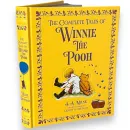
Review: Winnie the Pooh

Winnie-the-Pooh: A Gentle Classic That Celebrates Friendship, Imagination, and the Joy of Simple Moments
Winnie-the-Pooh by A. A. Milne is one of those rare books that grows alongside its reader. First published in 1926, it was originally written for children, yet it has quietly earned a permanent place in adult literature as well. As an experienced writer and long-time book seller, I have seen Winnie-the-Pooh purchased for toddlers, gifted to new parents, rediscovered by nostalgic adults, and even quoted by executives looking for unexpected wisdom. Its charm lies in its simplicity, but its staying power comes from something deeper.
At first glance, the book appears to be a collection of lighthearted stories about a bear who enjoys honey and his friends in the Hundred Acre Wood. In practice, it is a thoughtful exploration of friendship, kindness, patience, and the small absurdities of everyday life—told in a voice that feels timeless and reassuring.
Overview of Content and Structure
Winnie-the-Pooh is structured as a series of episodic stories, each focusing on Pooh and one or more of his companions: Piglet, Eeyore, Tigger, Rabbit, Owl, Kanga, and Roo. The stories are loosely connected, allowing readers to enjoy them independently or as part of a continuous reading experience.
The narrative voice plays a central role. Milne writes as both storyteller and gentle guide, often breaking the fourth wall to address the reader directly. This conversational tone makes the book especially engaging when read aloud, which is one reason it has remained a favorite bedtime book for generations.
E. H. Shepard’s original illustrations are an essential part of the experience. They do not simply decorate the text; they enhance the storytelling, adding warmth, humor, and emotional clarity. Many readers associate these illustrations as strongly with the characters as the words themselves.
Summary
At its heart, Winnie-the-Pooh follows the everyday adventures of a small group of friends navigating life in the Hundred Acre Wood. The challenges they face are intentionally modest: finding honey, helping a friend feel better, organizing an expedition, or solving a misunderstanding. There are no grand villains or dramatic conflicts.
Instead, the book focuses on how the characters relate to one another. Pooh’s thoughtful innocence, Piglet’s quiet courage, Eeyore’s dry realism, and Rabbit’s need for order all create moments that feel both humorous and familiar. Through these interactions, the book highlights empathy, loyalty, and the importance of being present for others—even when you do not have all the answers.
While the stories are simple on the surface, they subtly reflect real emotional experiences, making them meaningful to readers of all ages.
Language, Humor, and Emotional Depth
Milne’s writing style is deceptively simple. The language is clear, playful, and accessible to children, yet it contains layers of humor and insight that resonate with adults. Much of the comedy comes from wordplay, misunderstandings, and the contrast between how characters see themselves and how they actually behave.
What truly sets Winnie-the-Pooh apart is its emotional honesty. The book does not rush to fix feelings or dismiss them. Eeyore’s persistent gloom, for example, is not treated as something that needs to be corrected; instead, it is met with acceptance and quiet support. This approach feels remarkably modern and contributes to the book’s emotional authenticity.
Who This Book Is For
Winnie-the-Pooh is an excellent choice for families, educators, and readers who value character-driven stories. It works particularly well as a first chapter book for children, introducing them to narrative storytelling without overwhelming complexity.
For adults, the book offers a refreshing contrast to fast-paced, high-stimulation reading. Many readers return to it later in life and find new meaning in its quiet observations about friendship, uncertainty, and contentment. It is also a thoughtful gift book, often chosen for its emotional warmth rather than its length or plot.
Editions and Reading Experience
The book is widely available in various editions, from classic hardcovers featuring Shepard’s original illustrations to modern printings and digital formats. Collectors often prefer editions that preserve the original artwork and layout, while parents may opt for durable editions designed for frequent handling.
From a book-selling perspective, Winnie-the-Pooh consistently performs well across age groups, which speaks to its broad appeal and lasting relevance.
Final Verdict
Winnie-the-Pooh succeeds not by trying to teach lessons, but by gently illustrating them through everyday moments and honest friendships. It reminds readers that not every problem needs a solution, not every journey needs a destination, and not every story needs urgency.
For anyone looking for a book that offers comfort, quiet humor, and enduring emotional truth, Winnie-the-Pooh remains a standout classic. It is a story that invites readers to slow down, notice small joys, and remember that sometimes the simplest stories leave the deepest impressions.
Interface 8
Key Functions 7.5
Usability 9.5
Cross Platform 7.5
Timeless storytelling suitable for all ages;;Warm, memorable characters with emotional depth;;Ideal for reading aloud or independent reading;;Gentle humor that appeals to both children and adults;;Classic illustrations that enhance the narrative
Minimal plot progression may not appeal to readers seeking actiondriven stories;;The pacing is intentionally slow, which may feel understated to some audiences;;Short episodic structure may leave readers wanting more continuity