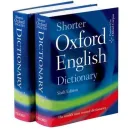
Review: Oxford english dictionary

The Oxford English Dictionary: The Definitive Record of the English Language
The Oxford English Dictionary (OED) is not merely a reference book; it is the most comprehensive historical record of the English language ever assembled. For writers, editors, researchers, educators, and serious readers, it represents authority, precision, and depth unmatched by any other dictionary. As an experienced writer and book seller, I often describe the OED as a working tool rather than a casual reference—one designed for those who care not only about what words mean, but how they came to mean it.
Unlike standard dictionaries focused on modern usage alone, the OED documents the life of words. It traces their origins, evolution, shifts in meaning, and real-world usage across centuries. This approach makes the OED as much a scholarly archive as it is a linguistic guide.
Overview of Content and Structure
The Oxford English Dictionary is structured around entries that go far beyond brief definitions. Each word is presented with its etymology, phonetic pronunciation, grammatical forms, and a chronological series of meanings. These meanings are supported by dated quotations drawn from literature, academic writing, journalism, and public discourse.
This structure allows readers to see language as a living system rather than a fixed set of rules. Words are shown evolving in response to social change, technology, and cultural influence. The dictionary does not prescribe usage; it documents it with evidence.
In its complete form, the OED spans multiple volumes in print and is more commonly accessed today through its digital edition, which is continuously updated to reflect ongoing linguistic development.
Summary
At its core, the Oxford English Dictionary aims to record the English language in full historical detail. Each entry tells the story of a word from its earliest known appearance to its current usage, when applicable. Rather than offering simplified explanations, the OED provides layered meanings supported by verifiable sources.
This makes the dictionary invaluable for anyone who needs accuracy and context. Writers use it to confirm nuanced meanings, historians rely on it to understand period-specific language, and linguists study it to track patterns of change. The OED does not simplify language for convenience; it preserves complexity with clarity.
Authority, Accuracy, and Scholarly Value
What distinguishes the OED from other dictionaries is its editorial rigor. Every definition is supported by documented evidence, and updates are handled by teams of lexicographers who specialize in linguistic research. The dictionary reflects consensus based on usage, not opinion.
From a professional standpoint, this level of authority matters. When precision is required—whether in academic writing, legal interpretation, or editorial decision-making—the OED is often treated as the final reference. Its citations provide context that short-form dictionaries simply cannot offer.
The OED’s historical approach also prevents misinterpretation. By showing how meanings have shifted over time, it helps readers avoid applying modern assumptions to older texts.
Language as History and Culture
Beyond definitions, the OED serves as a cultural record. Its quotations capture how people have expressed ideas, emotions, and discoveries across centuries. Reading entries can feel like moving through literary and social history, one word at a time.
This aspect makes the dictionary unexpectedly engaging. Browsing the OED often leads readers from linguistics into history, literature, science, and philosophy. For curious readers, it becomes less of a tool and more of an exploration.
As a bookseller, I have found that customers who invest in the OED often do so not for immediate need, but for long-term reference and intellectual satisfaction.
Who Will Benefit Most from This Dictionary
The Oxford English Dictionary is best suited for advanced users of language. Writers, editors, linguists, translators, historians, and graduate-level students will find it indispensable. It is especially valuable for those working with older texts or dealing with nuanced distinctions in meaning.
General readers may find the OED more demanding than everyday dictionaries, but those with curiosity about language often grow into it over time. It rewards patience and sustained engagement rather than speed.
Editions and Access
Historically published as a multi-volume print set, the OED is now most widely used through its online edition. The digital format allows for powerful search capabilities, cross-referencing, and regular updates that reflect new words and evolving usage.
From a practical perspective, the online version has become the preferred choice for professionals, while print editions remain valued by collectors, institutions, and libraries as symbols of scholarly tradition.
Final Verdict
The Oxford English Dictionary stands as the definitive authority on the English language, not because it simplifies meaning, but because it preserves it with precision and context. It treats language as history, evidence, and lived experience rather than a static system.
For anyone who works seriously with words or seeks to understand how language reflects human thought over time, the OED is not optional—it is foundational. It is a reference that informs, challenges, and rewards those willing to engage with language at its deepest level.
Interface 8
Key Functions 8.5
Usability 10
Cross Platform 8.5
Unmatched depth and historical coverage;;Authoritative, evidence-based definitions;;Detailed etymologies and usage examples;;Essential for academic, editorial, and research work;;Continuously updated digital edition
Not designed for quick, casual lookups;;Length and detail may feel overwhelming to general readers;;Full access typically requires a paid subscription or institutional access